Roger Zelazny
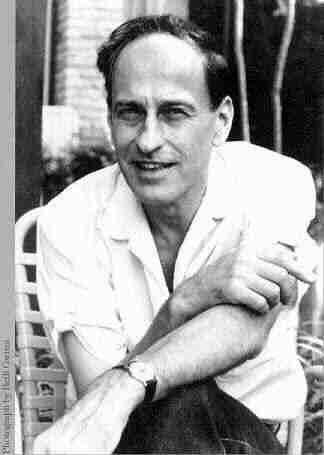
1937 - 1995 |
The page of New Wave bore Roger's
fresh face
Set the pace and taste
for his time and place
In the Courts of Chaos
Corwin struts in Amber
Only those of true
lineage may walk the pattern
Bloody family feuds and a
super computer in limbo
Don't sleep with out a
pack of trumps under their pillow
Worlds of the fantastic -
dense and specific, unscientific
New twists on old myths -
man to God metamorphosis
So what his new hits
ain't as good or as thick, It's not his fault 'Damnation Alley' sucked shit
'My name is Legion' will
leave no doubt, or 'The Doors of his Face, the Lamps of his Mouth' |
Biography
US writer, born in Ohio, with an MA from Columbia University in 1962. In 1962-9 he was employed by the Social Security Administration in Cleveland, Ohio, and Baltimore, Maryland; from 1969 he wrote full-time. His arrival in the sf world in 1962, along with Samuel R. DELANY, Thomas M. DISCH and Ursula K. LE GUIN, marked that year as a milestone in what seemed at the time to be the inevitable maturing of sf into a complex and sophisticated literature, whose language might finally match its intermittent hubris. With Delany, Disch and (to a lesser extent) Le Guin -- and with Harlan ELLISON goading all and sundry -- RZ became a leading and representative figure of the US NEW WAVE, writing stories whose emphasis had shifted from the external world of the hard sciences to the internal worlds explorable through disciplines like PSYCHOLOGY (mostly Jungian), SOCIOLOGY and LINGUISTICS. To a greater extent than any of his colleagues, however, RZ expressed this shift by using mythological structures -- some traditional, some new-minted -- in his work. It has been argued that in true MYTHOLOGY the voyage into CONCEPTUAL BREAKTHROUGH of the Hero of a Thousand Faces always climaxes in the Eternal Return, so that any 20th-century sf tale which retells a myth incorporates, by so doing, ironies and metaphors highly corrosive of any rhetoric of outward thrust, and mockingly dismissive of the reality of breakthroughs. It may be for this reason that RZ's sf was language-driven, irony-choked, corrosively playful, and -- after the early years of his career -- intermittent; and that he is now best known for his works of fantasy, in particular the 2 linked sequences making up the ongoing Amber series.
The 1st, featuring Corwin, is Nine Princes in Amber (1970), The Guns of Avalon (1972), Sign of the Unicorn (1975), The Hand of Oberon (1976) and The Courts of Chaos (1978), all assembled as The Chronicles of Amber (omni in 2 vols 1979). The 2nd, featuring Corwin's son Merlin, comprises Trumps of Doom (1985), Blood of Amber (1986), Sign of Chaos (1987), Knight of Shadows (1989) and Prince of Chaos (1991). There are 2 pendants, A Rhapsody in Amber (coll 1981 chap) and Roger Zelazny's Visual Guide to Castle Amber (1988) with Neil Randall. Like C.S. LEWIS's Narnia, the land of Amber exists on a plane of greater fundamental reality than Earth, and provides normal reality with its ontological base. Unlike Narnia, however, Amber is the Yin in the Yang of Chaos the father, with consequences very far from Christian, for the Universe so defined is both cyclical and eternally insecure; and Amber itself is dominated by a cabal of squabbling siblings whose quasi-Olympian feudings generate vast cat's-cradles and imperfect nestings of Story, out of which the fabric of lesser realities takes its shape. The Amber books constitute RZ's most substantial edifice, though not his finest work, which is sf. Other fantasies have been lesser.
RZ's first published story was "Passion Play" for AMZ in 1962, and for several years he was prolific in shorter forms, for a time using the pseudonym Harrison Denmark when stories piled up in AMZ and Fantastic, and doing his finest work at the novelette/novella length; he assembled the best of this early work as Four for Tomorrow (coll 1967; vt A Rose for Ecclesiastes 1969 UK) and The Doors of His Face, the Lamps of His Mouth, and Other Stories (coll 1971). The magazine titles of his first 2 books were as well known as their book titles, and the awards given them were attached to the magazine titles. THIS IMMORTAL (1965 FSF as ". . . And Call me Conrad"; exp 1966) won the 1966 HUGO for Best Novel; THE DREAM MASTER (1965 AMZ as "He Who Shapes"; exp 1966) -- the magazine version was eventually released as He Who Shapes (1989 dos) -- won the 1966 NEBULA for Best Novella; and in the same year The Doors of His Face, the Lamps of His Mouth (1965 FSF; 1991 chap) won a Nebula for Best Novelette. Taken together, the 3 tales make up a portrait of RZ's central worlds, themes and protagonist, a portrait which would be repeated, with sometimes lessened force, for decades. The VENUS on which "Doors" is set, like most of RZ's worlds to come, is fantastical, densely described, almost entirely "unscientific"; the plot intoxicatingly dashes together myth and literary assonances -- in this case Herman MELVILLE's Moby-Dick (1851) -- and sex. THIS IMMORTAL takes place in a baroquely described post-HOLOCAUST Earth which has become a kind of theme-park for the ALIEN Vegans; in this shadowy realm of belatedness and human angst, the immortal Conrad Nomikos serves ostensibly as Arts Commissioner but turns out to be in a far more telling sense the curator of the human enterprise, for, despite the US thriller idioms he uses in his personal speech, he closely resembles Herakles -- whose Labours the plot of the novel covertly replicates -- but is certainly both the Hero of a Thousand Faces and the Trickster who mocks the high road of myth, redeemer and road-runner both. Under various names, this basic figure crops up in most of RZ's later books: wisecracking, melancholic, romantic, sentimental, lonely, metamorphosing into higher states whenever necessary to cope with the plot, and in almost every sense an astonishingly sophisticated wish-fulfilment.
In THE DREAM MASTER -- for one of the few times in his career -- RZ presented the counter-myth, the story of the metamorphosis which fails, the transcendence which collapses back into the mortal world. In THIS IMMORTAL, RS had already evinced a tendency to side, perhaps a little too openly, with complexly gifted, vain, dominating, immortal protagonists, and, as THE DREAM MASTER begins, his treatment of psychiatrist Charles Render seems no different. Render is eminent in the new field of neuroparticipant psychiatry, in which the healer actually enters the mindspace of his patient -- which is laid out like a Jungian tournament of the cohorts of the self -- and takes therapeutic action from within this VIRTUAL REALITY. But Render becomes hubristic, and when he enters the mind of a congenitally blind woman, who is both extremely intelligent and insane, his attempts to cope with her intricate madness from within gradually expose his own deficiencies as a person, and he becomes subtly and terrifyingly trapped in a highly plausible psychic cul-de-sac. All the sf apparatus of the story, and its sometimes overly baroque manner, were integrated into RZ's once-only unveiling of the nature of a human hero who could not perform the moult into immortality.
After these triumphs, LORD OF LIGHT (1967), which won a 1968 Hugo, could have seemed anticlimactic, but it is in fact his most sustained single tale, richly conceived and plotted, exhilarating throughout its considerable length. Some of the crew of a human colony ship, which has deposited its settlers on a livable world, have made use of advanced technology to ensconce themselves in the role of gods, selecting those of the Hindu pantheon as models. But where there is Hinduism, the Buddha -- in the shape of the protagonist Sam -- must follow; and his liberation of the humans of the planet, who are mortal descendants of the original settlers, takes on aspects of both Prometheus and Coyote the Trickster. At points, Sam may seem just another of RZ's stable of slangy, raunchy, over-loved immortals; but the end effect of the book is liberating, wise, lucid.
None of RZ's subsequent sf quite achieved the metaphorical aptness of his first 3 novels, but Isle of the Dead (1969) and Creatures of Light and Darkness (1969) both embody complex plots, mythic resonance and a fluent intensity of language. Damnation Alley (1969), a darker and coarser tale, depicts a post-holocaust motor-cycle-trek across a vicious USA; it was filmed with many changes as DAMNATION ALLEY (1977). Jack of Shadows (1971), though set on a planet which keeps one face always to its sun, has all the tonality and dream-like plotting of a fantasy: a fine one.
From the mid-1970s on, RZ's work maintained a certain consistency, and always threatened to explode in the mind's eye; but did not quite do so. Deus Irae (1976), with Philip K. DICK, is uneasy. Doorways in the Sand (1976) is a delightfully complicated chase tale, involving a MCGUFFIN and an entire galactic community. My Name is Legion (fixup 1976) -- which included the Hugo- and Nebula-winning Home is the Hangman (1975 ASF; 1990 chap dos) -- puts into definitive form the Chandleresque version of the RZ HERO. Roadmarks (1979) engrossingly fleshes out the notion that the turnings off a metaphysical freeway might constitute turnings in time not space. The Last Defender of Camelot (1980 chap), which became the title story of The Last Defender of Camelot (coll 1980; with 4 stories added, exp 1981), Unicorn Variations (coll 1983), which included the Hugo-winning "Unicorn Variation" (1981), and Frost and Fire (coll 1989) -- which contained "24 Views of Mount Fuji" (1985) and "Permafrost" (1986), both Hugo-winners -- represent competent later short stories. Eye of Cat (1982) is a proficient sf thriller with a striking alien and some effective Navajo venues. Had it not been for the romantic sublimities of his first years, RZ's career might have been seen as triumphant.
He is not, however, regarded as a writer whose later works have fulfilled his promise, and it may be that he has suffered the inevitable price of writing at the peak of intensity and conviction when young: that he may already have put into definitive form the heart of what exercises him as a man and as a writer. The plummets into INNER SPACE, the sensitized baroque intricacy of his rendering of the immortal longings of men who all too easily slip into secret-guardian routines, the rush into metamorphosis: all have had their cost. Though his Amber books and some other fantasies (see listing below) exhibit a sustained freshness, RZ's sf readership has been left with the inspired facility of an extremely intelligent writer who does not desperately need to utter another word. [JC]
Bibliography
Novels
Bridge of Ashes (1976)
Changeling (1980)
The Changing Land (1981)
Creatures of Light and Darkness (1969)
Damnation Alley (1969)
A Dark Travelling (1987)
Dilvish, the Damned (1982)
The Dream Master (1966)
Doorways in the Sand (1976)
Eye of Cat (1982)
Here There Be Dragons (1992)
Isle of the Dead (1969)
Jack of Shadows (1971)
Lord of Light (1967) (2)
Madwand (1981)
A Night in the Lonesome October (illustrated by Gahan Wilson) (1993)
Roadmarks (1979)
This Immortal (1966)
To Die in Italbar (1973)
Today We Choose Faces (1973)
Way Up High (1992)
Wizard World (1989) (compilation of Changeling and Madwand)
Amber Novels
The Amber series (1970-1991)
First Chronicles:
Nine Princes in Amber (1970) (2)
The Guns of Avalon (1972)
Sign of the Unicorn (1975)
The Hand of Oberon (1976)
The Courts of Chaos (1978)
Second Chronicles:
Trumps of Doom (1985)
Blood of Amber (1986)
Sign of Chaos (1987)
Knight of Shadows (1989)
Prince of Chaos (1991)
Story Collections
The Doors of His Face, the Lamps of His Mouth (1971) (2) (4)
Four for Tomorrow (1967)
Frost and Fire (1989) (2) (2) (3)
The Illustrated Roger Zelazny (1978)
The Last Defender of Camelot (1980) (3) (2)
My Name Is Legion (1976) (2)
Unicorn Variations (1983) (2)
Uncollected Stories
Amber Stories
Recent Stories (2)
Older Stories (pre-1972)
Collaborations
The Black Throne (with Fred Saberhagen) (1990)
Bring Me the Head of Prince Charming (with Robert Sheckley) (1991)
Coils (with Fred Saberhagen) (1980)
Deus Irae (with Phillip K. Dick) (1976)
Donnerjack (with Jane Lindskold) (August 1997)
A Farce to Be Reckoned With (with Robert Sheckley) (1995)
Flare (with Thomas T. Thomas) (1992)
If at Faust You Don't Succeed (with Robert Sheckley) (1993)
Lord Demon (with Jane Lindskold) (August 1999)
The Mask of Loki (with Thomas T. Thomas) (1992)
Psychoshop (with Alfred Bester) (July 1998)
Edited/Sponsered By Zelazny
Alien Speedway series (1987-1988)
Combat Command:
#6: The Black Road War (by Neil Randall, set in the Amber universe) (1988)
#? Seven No-Trump (by Neil Randall, set in the Amber universe) (Feb. 1988)
Forever After (with Robert Asprin, David Drake, Jane Lindskold, & Mike Stackpole) (1995)
Nebula Award Stories 3 (1968) (3) (4)
Warriors of Blood and Dreams (1995)
Wheel of Fortune (1995)
The Williamson Effect (1996)
Non-Genre Works by Zelazny
Hymn to the Sun An Imitation (poetry) (February 1996)
Poems (poetry) (1974)
To Spin is Miracle Cat (poetry) (1981)
When Pussywillows Last in the Catyard Bloomed (poetry) (1980)
Wilderness (fiction) (with Gerald Hausman) (1994)